What-World-Way
Stag-Forest-Keen


Your What-World-Way
How you move through the world as a Stag-Forest-Keen
You guard human dignity with the sensitivity of someone who feels injustice as a physical wound. Your inner world is a high-resolution empathic scanner: you perceive mistreatment and exclusion with a depth and specificity that most people's moral awareness never approaches. When you intervene, it's with the precision of someone who understands exactly what's wrong and exactly who's affected. Your wealth is in this deeply felt justice.
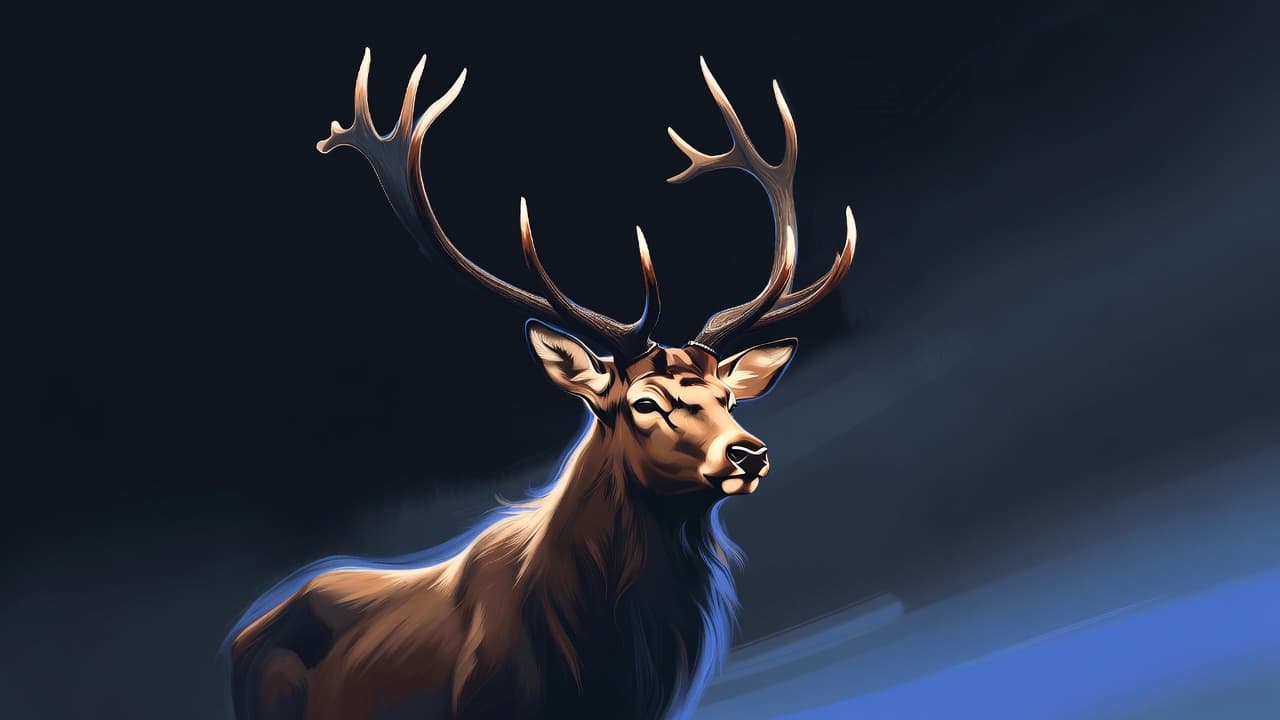
Your What: The Stag 🦌
Nobility, standards
At your best, you are principled, fair, and improving everything you touch. You have an internal compass for what's right that's remarkably precise — not rigid, but genuinely calibrated to justice and quality.
You're the person who notices what could be better and feels a genuine responsibility to improve it. Not from arrogance, but from care. When something isn't right — a process, a decision, a standard being let slide — you can't simply look away. Your gift is the ability to see the gap between what is and what should be, and the integrity to close it.
You guard fairness and inclusion. Your sense of right is oriented toward people — ensuring everyone is treated equitably.
People rely on you to hold the standard. To be the person who says 'this isn't good enough' when everyone else is ready to settle. To notice the detail others miss. To care enough about quality that you'll do the unglamorous work of keeping things right.
Your World: Forest 🌳
The world you're most drawn to
At your centre is a conviction that every person matters. Not as an abstract principle but as a lived reality — you genuinely see the individual in front of you, with their specific joys and struggles and dignity. The quality of a society is measured by how it treats its most vulnerable members.
For you, wealth is collective and relational. It's the depth of understanding between people, the quality of care in a community, the feeling that nobody has been left behind. Personal success that comes at others' expense doesn't feel like success to you.
You naturally create inclusive environments. You notice who's not speaking in a meeting, who's been left out of a plan, whose perspective hasn't been considered. You advocate for fairness not from moral superiority but from genuine empathy — you feel the exclusion as if it were your own.
Your Way: Keen
Layered, perceptive, depth-feeling
You experience the world at high resolution. Where others see a situation, you see layers — emotional, historical, systemic, aesthetic. Your mind doesn't skim; it dives. This isn't always comfortable. You feel things intensely, notice subtleties others miss, and process experiences long after they've ended for everyone else.
People sense your depth even before you speak. There's a quality of attentiveness about you — a sense that you're taking in more than you're letting on. When you do share what you see, it often startles people with its precision and honesty.
At your best: At your best, you bring depth where others bring speed. Conversations go further with you in them because you've already noticed what others are only just starting to say.
What people count on you for: People count on your sensitivity — to notice when someone's struggling, to bring depth to what could have been a shallow exchange, to remember the small details that made someone feel held.
How you come across
Communication style and humour
You communicate subtly — careful word choice, layered remarks, observations that do multiple things at once. Your humour is that attentiveness made playful: ironic, slow-burn, the punchline arriving because someone finally named what everyone else walked past. Humour is where the gap shows worst: at your best you reframe a whole conversation with a single line; at the edges, less attentive listeners walk past it altogether and you can feel unseen in your own sharpest moments.
Also known as
How your What-World-Way maps to other frameworks
These are the primary reads at this Glimpse depth. With a longer assessment like Px Insight you’ll often see strong secondary mappings — and sometimes a third pattern underneath — that round out the picture in nice ways.
Jungian type: INFJ
★★★★★Keen's profile — high openness, more reserved, harmonious, emotionally sensitive, plus heightened sensory processing — maps to introverted intuition-feeling: deep, layered, perceptive.
Some animals like Stag and Eagle bring strong Conscientiousness, which makes INFJ (advocate) more likely than INFP (mediator).
Marston four-style (DISC): S-C blend (sensitive)
★★★★★S = low E + high A + low N; sensitive variant adds Conscientiousness flavour. Keen lands in S-C territory.
Enneagram type: Type 1
The Stag archetype expresses motivational dynamics similar to Enneagram Type 1 — nobility, standards. Your Animal pillar carries this shape, drawing on the Enneagram tradition without being defined by it.
Gravesian level: FS (also called Green in Spiral Dynamics)
The Forest worldview corresponds to the sixth Gravesian level — FS in Clare W. Graves’ original notation, popularised as Green by Beck and Cowan in Spiral Dynamics.
Some people sit between two or three Gravesian levels rather than landing cleanly on one — a longer assessment tends to reveal that mix.
Star ratings indicate how confidently the Way pillar's Big Five signature maps to each framework — see how confidence works.
There’s more to your What-World-Way
The full Stag-Forest-Keen experience includes your inner tensions, how you respond in good times and bad, navigating your reactive patterns, and tools for relationships and teams. Take the assessments in the Px app to unlock your complete personal page.
Share this What-World-Way