What-World-Way
Fox-Forest-White
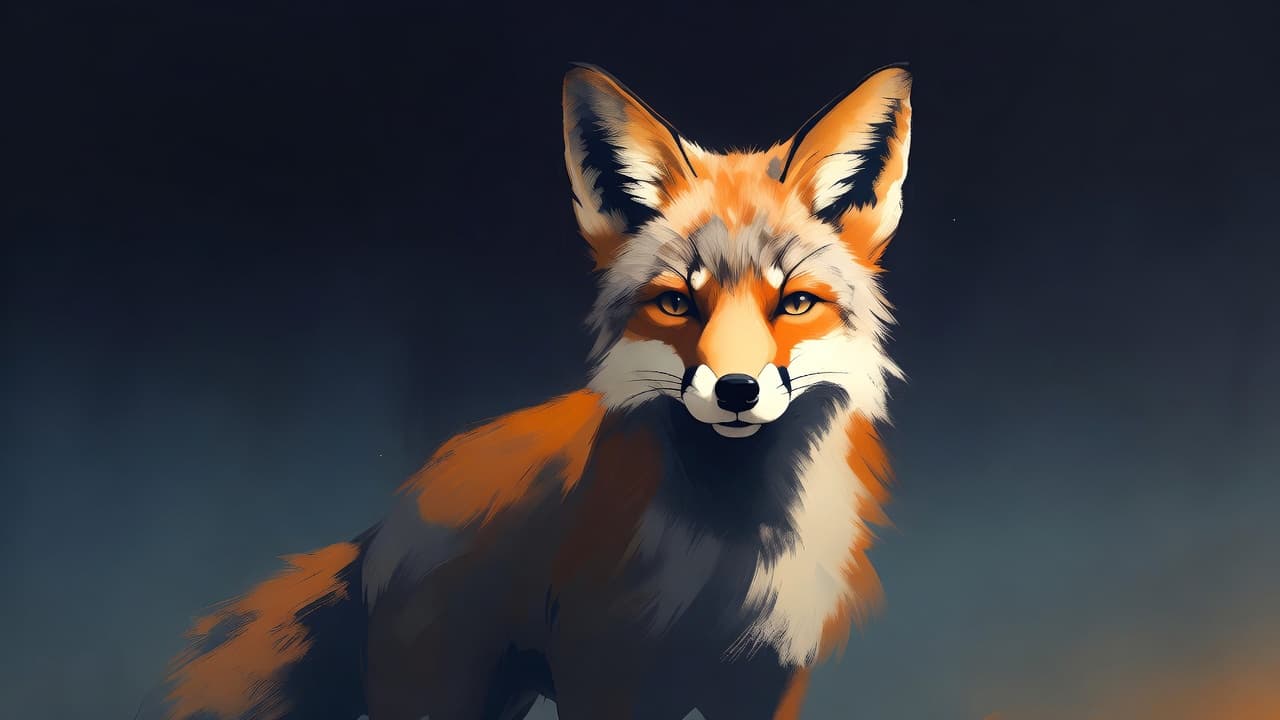


Your What-World-Way
How you move through the world as a Fox-Forest-White
Your art reaches people through whichever channel will let them receive it. Some pieces are loud; some quiet; some funny; some grave. The empathetic centre is the same — you're trying to help people feel something true — but you don't insist on a single way of producing the feeling. Your wealth is in this: a body of work that has reached audiences a single-register artist couldn't reach, because the artist kept matching the form to what would actually let the feeling land.
Your What: The Fox 🦊
Individuality, creativity
At your best, you are creative, emotionally honest, and bringing beauty and meaning to everything you touch. You have access to emotional depths that most people avoid — and the courage to express what you find there.
You're the person who makes the invisible visible. You take the experiences, emotions, and truths that everyone feels but nobody says and give them form. Your gift isn't just artistic skill; it's emotional honesty. You refuse to pretend that everything is fine when it isn't, and that refusal creates space for everyone around you to be more real.
You create art that connects people to each other and to their own buried feelings. Your gift is empathic — you feel what others feel and give it voice.
People rely on you to tell the truth about what it feels like to be alive. To create beauty from difficulty. To remind them that depth, authenticity, and emotional honesty aren't weaknesses — they're the most human things there are.
Your World: Forest 🌳
The world you're most drawn to
At your centre is a conviction that every person matters. Not as an abstract principle but as a lived reality — you genuinely see the individual in front of you, with their specific joys and struggles and dignity. The quality of a society is measured by how it treats its most vulnerable members.
For you, wealth is collective and relational. It's the depth of understanding between people, the quality of care in a community, the feeling that nobody has been left behind. Personal success that comes at others' expense doesn't feel like success to you.
You naturally create inclusive environments. You notice who's not speaking in a meeting, who's been left out of a plan, whose perspective hasn't been considered. You advocate for fairness not from moral superiority but from genuine empathy — you feel the exclusion as if it were your own.
Your Way: White
Balanced, adaptive, multi-mode
Your way of being doesn't have a single dominant note. You read situations and bring whichever mode answers them — direct when directness helps, gentle when gentleness does, considered when consideration does. Where others lock into one register, you stay fluid; where others have one signature, you have access to several.
People in your immediate register often feel met around you, because you've matched their mode without having to think about it. The cost is that nobody quite knows your signature — you might be the most adaptive person at the table without anyone being able to name what your style actually is.
At your best: At your best, you adapt. You read what a situation needs and bring whichever mode answers it. Where others lock into a default register, you stay fluid — and the room ends up working in ways it couldn't have if every voice was the same shape.
What people count on you for: People count on you for range — to match the moment, to bring the mode it needs without locking into one. Your flexibility is the contribution. You're the person other people don't realise they're relying on until you're not in the room.
How you come across
Communication style and humour
You communicate adaptively — picking up the register of whoever's around. With Bolds, you can be blunt; with Warms, you can spin a story; with Keens, you can run layered. Humour amplifies both the gift and the cost: at your best you create rapport across registers that single-mode communicators can't reach; at the edges, nobody quite knows your signature — you might be the funniest person at the table without anyone being able to say what your humour actually is.
Also known as
How your What-World-Way maps to other frameworks
These are the primary reads at this Glimpse depth. With a longer assessment like Px Insight you’ll often see strong secondary mappings — and sometimes a third pattern underneath — that round out the picture in nice ways.
Jungian type: Variable
★★★★★White's flat or weak-fit profile means no single Jungian type fits cleanly. The reading depends on which traits sit slightly above the midline — and the Animal contributes more to the type than the Way does.
When Way is White, the Animal carries the Jungian read more than the Way does. Look to the Animal's typical type for the most reliable signal.
Marston four-style (DISC): Variable / multi-style
★★★★★White doesn't sit cleanly in any single DISC quadrant — by design. White's contribution is multi-mode adaptability, picking up whichever style the situation calls for.
Enneagram type: Type 4
The Fox archetype expresses motivational dynamics similar to Enneagram Type 4 — individuality, creativity. Your Animal pillar carries this shape, drawing on the Enneagram tradition without being defined by it.
Gravesian level: FS (also called Green in Spiral Dynamics)
The Forest worldview corresponds to the sixth Gravesian level — FS in Clare W. Graves’ original notation, popularised as Green by Beck and Cowan in Spiral Dynamics.
Some people sit between two or three Gravesian levels rather than landing cleanly on one — a longer assessment tends to reveal that mix.
Star ratings indicate how confidently the Way pillar's Big Five signature maps to each framework — see how confidence works.
There’s more to your What-World-Way
The full Fox-Forest-White experience includes your inner tensions, how you respond in good times and bad, navigating your reactive patterns, and tools for relationships and teams. Take the assessments in the Px app to unlock your complete personal page.
Share this What-World-Way